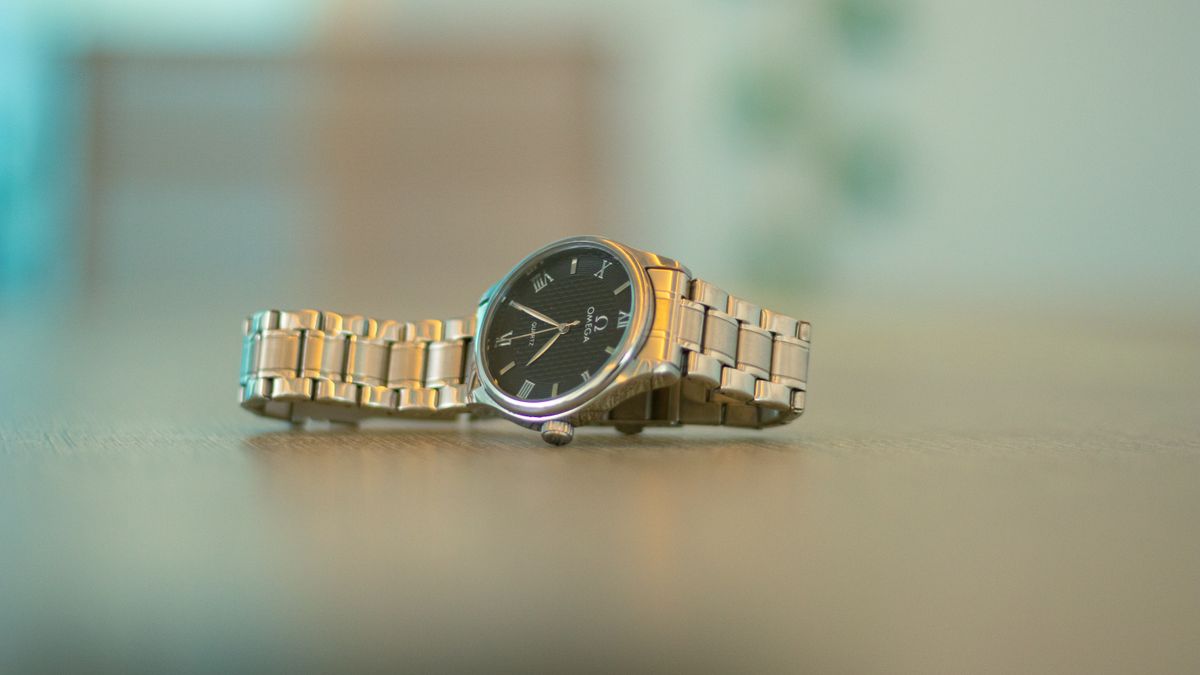
Omega has made hundreds of different calibres. Eighty-two of them are documented here, grouped by family: the hand-wound 30T2, the early bumper automatics, the 5xx automatics that ran the Constellation, the 6xx that is its hand-wound sister, the chronographs fitted to the Speedmaster, and the 10xx automatics of the 1970s. Click a calibre number to open its full entry.
| Calibre | Type | Jewels | Frequency | Years | Key note |
|---|---|---|---|---|---|
| 30T2 | Hand-wound | 15 | 18,000 vph | 1939 | The original — no shock protection anywhere in it |
| 30T2 PC | Hand-wound | 15 | 18,000 vph | ~1943 | Incabloc arrives |
| 260 | Hand-wound | 15 | 18,000 vph | 1949 | The 30T2 with a 1949 number on it |
| 261 | Hand-wound | 17 | 18,000 vph | 1949 | Up to 17 jewels, and antimagnetic |
| 262 | Hand-wound | 17 | 18,000 vph | 1949 | Chronometer grade, eccentric regulator |
| 265 | Hand-wound | 15 | 18,000 vph | 1949 | Antimagnetic, Incabloc fitted |
| 266 | Hand-wound | 17 | 18,000 vph | 1950 | 17 jewels, antimagnetic |
| 267 | Hand-wound | 17 | 18,000 vph | 1950 | A 266 in all but the number |
| 268 | Hand-wound | 17 | 18,000 vph | ~1955 | Smooth-rim balance replaces the screwed one |
| 269 | Hand-wound | 17 | 18,000 vph | 1957 | Flat hairspring, Novochoc shock setting |
| 30T2 SC | Hand-wound | 16 | 18,000 vph | 1939 | The RAF version |
| 280 | Hand-wound | 17 | 18,000 vph | 1949 | The 30SC T2 under a new number |
| 281 | Hand-wound | 17 | 18,000 vph | 1949 | Fine regulation by eccentric screw |
| 283 | Hand-wound | 17 | 18,000 vph | 1949 | Sold as the Omega Century |
| 284 | Hand-wound | 17 | 18,000 vph | 1957 | Two seasons only, 1957–58, so it is a scarce one |
| 285 | Hand-wound | 17 | 18,000 vph | 1958 | Plain-rim balance, no screws |
| 286 | Hand-wound | 17 | 18,000 vph | 1961 | Flat hairspring and Novochoc, as on the 269 |
| 330 | Automatic (bumper) | 17 | 19,800 vph | 1943 | First of the bumpers |
| 331 | Automatic (bumper) | 17 | 19,800 vph | 1947 | Antimagnetic, chronometer grade |
| 332 | Automatic (bumper) | 17 | 19,800 vph | 1949 | The 331, tidied up |
| 333 | Automatic (bumper) | 17 | 19,800 vph | 1950 | Eccentric regulator version |
| 340 | Automatic (bumper) | 17 | 19,800 vph | 1943 | A smaller bumper, chronometer grade |
| 341 | Automatic (bumper) | 17 | 19,800 vph | 1947 | The Jubilé edition |
| 342 | Automatic (bumper) | 17 | 19,800 vph | 1949 | The first Seamaster ran on this |
| 343 | Automatic (bumper) | 17 | 19,800 vph | 1950 | Eccentric regulator, chronometer certified |
| 344 | Automatic (bumper) | 17 | 19,800 vph | 1953 | The 342, brought up to date |
| 350 | Automatic (bumper) | 17 | 19,800 vph | 1950 | Centre seconds at last |
| 351 | Automatic (bumper) | 17 | 19,800 vph | 1949 | A revised version |
| 352 | Automatic (bumper) | 17 | 19,800 vph | 1950 | Chronometer, eccentric regulator |
| 353 | Automatic (bumper), date | 17 | 19,800 vph | 1951 | Now with a date |
| 354 | Automatic (bumper) | 17 | 19,800 vph | 1953 | Swan-neck regulator on a chronometer |
| 355 | Automatic (bumper) | 17 | 19,800 vph | 1953 | The last of the bumpers |
| 550 | Automatic | 17 | 19,800 vph | 1958 | The base everything else is built on |
| 551 | Automatic, chronometer | 24 | 19,800 vph | 1959 | 24 jewels and a chronometer certificate |
| 552 | Automatic | 24 | 19,800 vph | 1959 | 24 jewels, no certificate — the Railmaster's |
| 570 | Automatic | 17 | 19,800 vph | 1959 | One more variant in the 5xx line |
| 571 | Automatic | 24 | 19,800 vph | 1959 | The 24-jewel variant |
| 560 | Automatic | 17 | 19,800 vph | 1959 | The 550 with a date added |
| 561 | Automatic, chronometer | 24 | 19,800 vph | 1959 | The Pie Pan Constellation calibre |
| 562 | Automatic | 24 | 19,800 vph | 1959 | A 561 without the certificate |
| 563 | Automatic | 17 | 19,800 vph | 1966 | The first with a quickset date; 17 jewels |
| 564 | Automatic, chronometer | 24 | 19,800 vph | 1966 | Quickset date and the certificate |
| 565 | Automatic | 24 | 19,800 vph | 1966 | Same as the 564, minus the certification |
| 590 | Automatic | 17 | 19,800 vph | 1960 | The compact 59x series opens here |
| 591 | Automatic | 20 | 19,800 vph | 1960 | 20 jewels |
| 592 | Automatic | 25 | 19,800 vph | 1960 | 25 jewels, the most of the four |
| 593 | Automatic | 17 | 19,800 vph | 1960 | Another 59x variant |
| 750 | Automatic, day-date | 17 | 19,800 vph | 1967 | The day of the week joins the date |
| 751 | Automatic, day-date, chronometer | 24 | 19,800 vph | 1967 | Day-date, chronometer certified |
| 752 | Automatic, day-date | 24 | 19,800 vph | 1967 | The uncertified 751 |
| 321 | Hand-wound chronograph | 17 | 18,000 vph | 1942–1968 | The one that reached the Moon in 1969 |
| 861 | Hand-wound chronograph | 17 | 21,600 vph | 1968–1996 | Cheaper to build; it replaced the 321 |
| 1861 | Hand-wound chronograph | 18 | 21,600 vph | 1996–2021 | An 861 under rhodium plating |
| 863 | Hand-wound chronograph | 17 | 21,600 vph | From 1985 | The better-finished variant |
| 866 | Hand-wound chronograph, moonphase | 17 | 21,600 vph | 1985–1988 | The first Moonwatch with a moonphase |
| 1040 | Automatic chronograph | 22 | 28,800 vph | From 1972 | Omega's automatic chronograph of the 1970s |
| 1045 | Automatic chronograph | — | — | From 1974 | A Lemania 5100 at heart, not an Omega design |
| 600 | Hand-wound | 17 | 19,800 vph | 1960 | The hand-wound root of the family |
| 601 | Hand-wound | 17 | 19,800 vph | 1960 | The Omega hand-wound you meet most often |
| 602 | Hand-wound, chronometer | 17 | 19,800 vph | ~1960 | Certified as a chronometer |
| 610 | Hand-wound, date | 17 | 19,800 vph | 1959 | A 600 with a date window |
| 611 | Hand-wound, date | 17 | 19,800 vph | 1959 | Date, but no quickset — set it by running the hands round |
| 613 | Hand-wound, quickset date | 17 | 19,800 vph | 1967 | The most complete 6xx: quickset date |
| 620 | Hand-wound, ladies' | — | 19,800 vph | 1960 | A ladies' calibre |
| 625 | Hand-wound | — | 21,600 vph | 1973 | Runs at 21,600 vph |
| 630 | Hand-wound | — | 19,800 vph | 1962 | Another variant in the line |
| 660 | Hand-wound, ladies' | 17 | 19,800 vph | 1961 | Where the ladies' 66x begins |
| 661 | Hand-wound, ladies' | 24 | 19,800 vph | 1963 | 24 jewels |
| 670 | Hand-wound, ladies' | 17 | 19,800 vph | 1963 | Ladies' calibre, 67x series |
| 671 | Hand-wound, ladies' | 24 | 19,800 vph | 1963 | The 24-jewel one |
| 672 | Hand-wound, ladies', chronometer | — | 19,800 vph | 1968 | Chronometer grade |
| 680 | Hand-wound, ladies', date | 17 | 19,800 vph | 1963 | With a date |
| 681 | Hand-wound, ladies', date | 24 | 19,800 vph | 1963 | Date, and 24 jewels |
| 682 | Hand-wound, ladies', chronometer | — | 19,800 vph | 1968 | The certified one |
| 1001 | Automatic, chronometer | 20 | 28,800 vph | 1968 – 1973 | The chronometer Omega had to redo |
| 1010 | Automatic | 17 | 28,800 vph | 1972 | Base calibre of the 10xx |
| 1011 | Automatic, chronometer | 23 | 28,800 vph | 1972 | The certified version |
| 1012 | Automatic | 23 | 28,800 vph | 1972 | Far and away the commonest of the 10xx |
| 1020 | Automatic | 17 | 28,800 vph | ~1975 | Where the series went next |
| 1021 | Automatic | — | 28,800 vph | ~1975 | Yet another variant |
| 1022 | Automatic, day-date | 23 | 28,800 vph | ~1975 | Day added alongside the date |
| 1030 | Hand-wound, date | 17 | 28,800 vph | 1974 – 1984 | The 10xx with the rotor taken off |
How to identify a vintage Omega
The calibre number is engraved on a bridge, so the caseback has to come off before you can read it. Families share architecture and parts across the range — the 30T2 was renumbered in 1949 into two branches, the 26x and the 28x, and the 6xx is the hand-wound sister of the automatic 5xx — so always work from the exact number stamped on the movement rather than from how the movement looks.