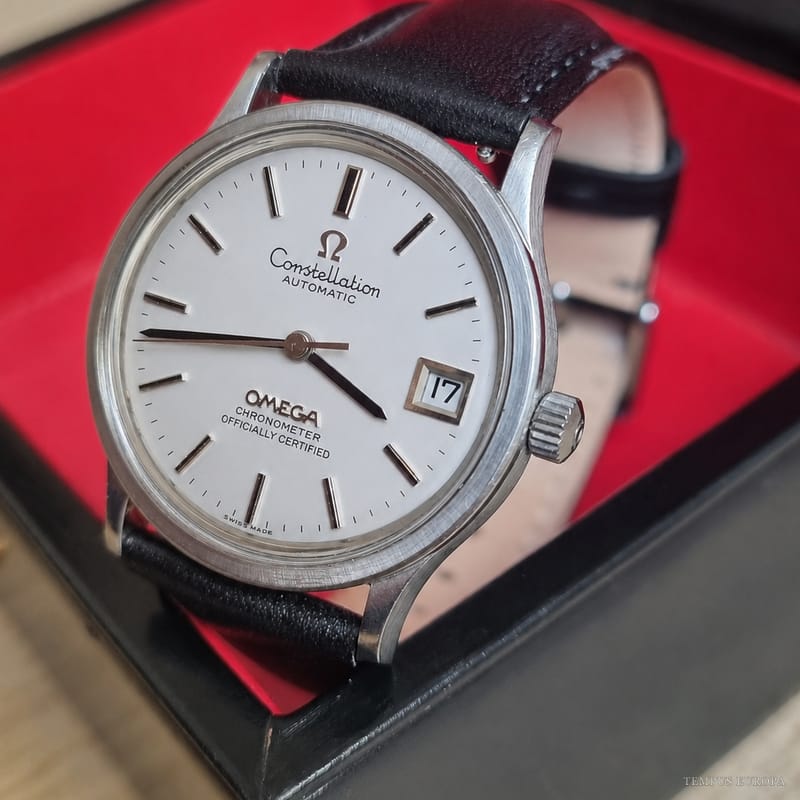
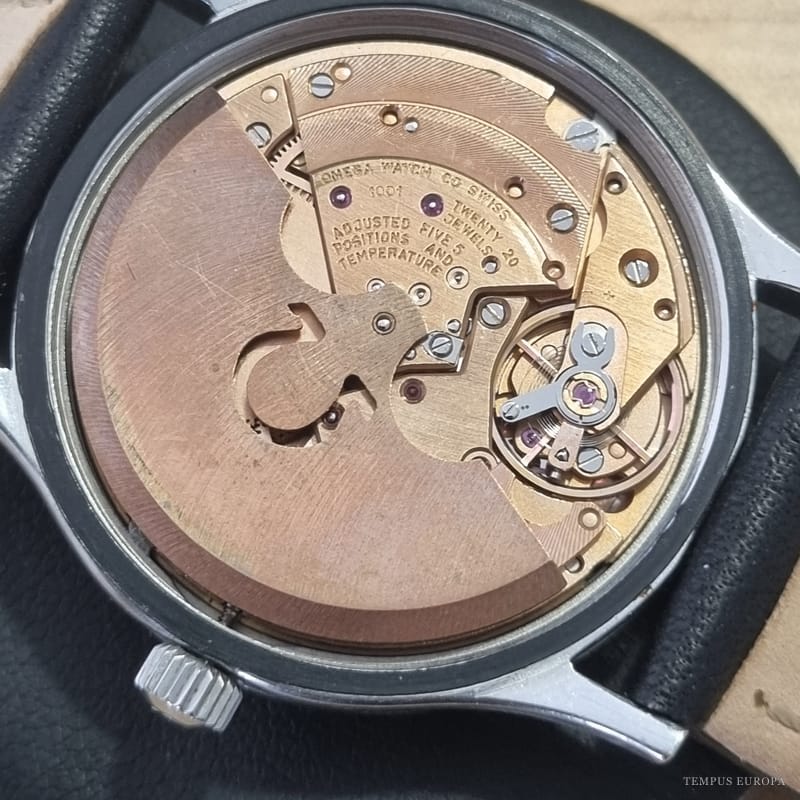
In one line
Twenty jewels, 28,800 vph and a chronometer certificate: this is the automatic that took Omega high-beat in 1968, and the one it had to redesign four years later.
First things first: the reputation
You will read that the 1001 is a calibre to avoid. That verdict comes from the standard reference blog on vintage Constellations, and it does not hedge: leave the 1000, 1001 and 1002 alone unless you can repair and service one yourself.
The watchmakers who open them tell the other half of the story. A good share of the faults laid at the design's door are really the result of botched services and decades without one. Both camps agree on a single point: this is not a movement that survives neglect.
One detail settles a lot of arguments: the number tells you the certification. A 1001 is always a chronometer. If the mainplate says 1002, you have exactly the same movement without the COSC paperwork, whatever the dial claims.
1001 versus 1011
Both were the Constellation's automatic chronometer in their day, four years and one top-to-bottom redesign apart.
| 1001 (1968) | ||
|---|---|---|
| Jewels | 20 | 23 |
| Frequency | 28,800 vph | 28,800 vph |
| Thickness | 4.25 mm | 4.25 mm |
| Certification | Chronometer | Chronometer |
| Parts | Original series | Nearly all new |
| Self-lubrication | Yes | Dropped |
| Reputation with watchmakers | Disputed | The good one in the family |
From the outside they are all but the same movement: same thickness, same frequency, same job. Inside, the 1011 is the 1001 after Omega did its homework.
On the market that shows up barely at all in the price, and very clearly in the watchmaker's bill.
1968: Omega puts its foot down
Kurt Vogt drew it in 1968, working under Alfred Rihs. Omega wanted a faster beat and cheaper production at the same time, and the series arrived in three versions: the 1000 with 17 jewels, the 1001 with 20 and a chronometer certificate, and the 1002 with those same 20 jewels but no trip to COSC. Only the 1001 earned a Constellation dial.
The layout is not the usual one. Rather than take a hand-wound calibre and bolt an automatic module on top, Omega built the winding mass into the movement from the start. The minute and seconds trains are driven indirectly, which clears the centre of the movement for a properly sized rotor bearing. All of it inside 4.25 mm.
The trouble came later. A new winding mechanism, and a lubrication scheme meant to run for years without a service, both misbehaved. In 1972 Omega rebuilt almost the entire calibre, and the 1010, 1011 and 1012 came out of that work — self-lubrication gone, date mechanism simplified. The 1000, 1001 and 1002 stayed in production until 1973.
The uncertified siblings went into Seamaster, Genève and De Ville models. The 1001, by definition, sits in watches whose dials read CHRONOMETER OFFICIALLY CERTIFIED.
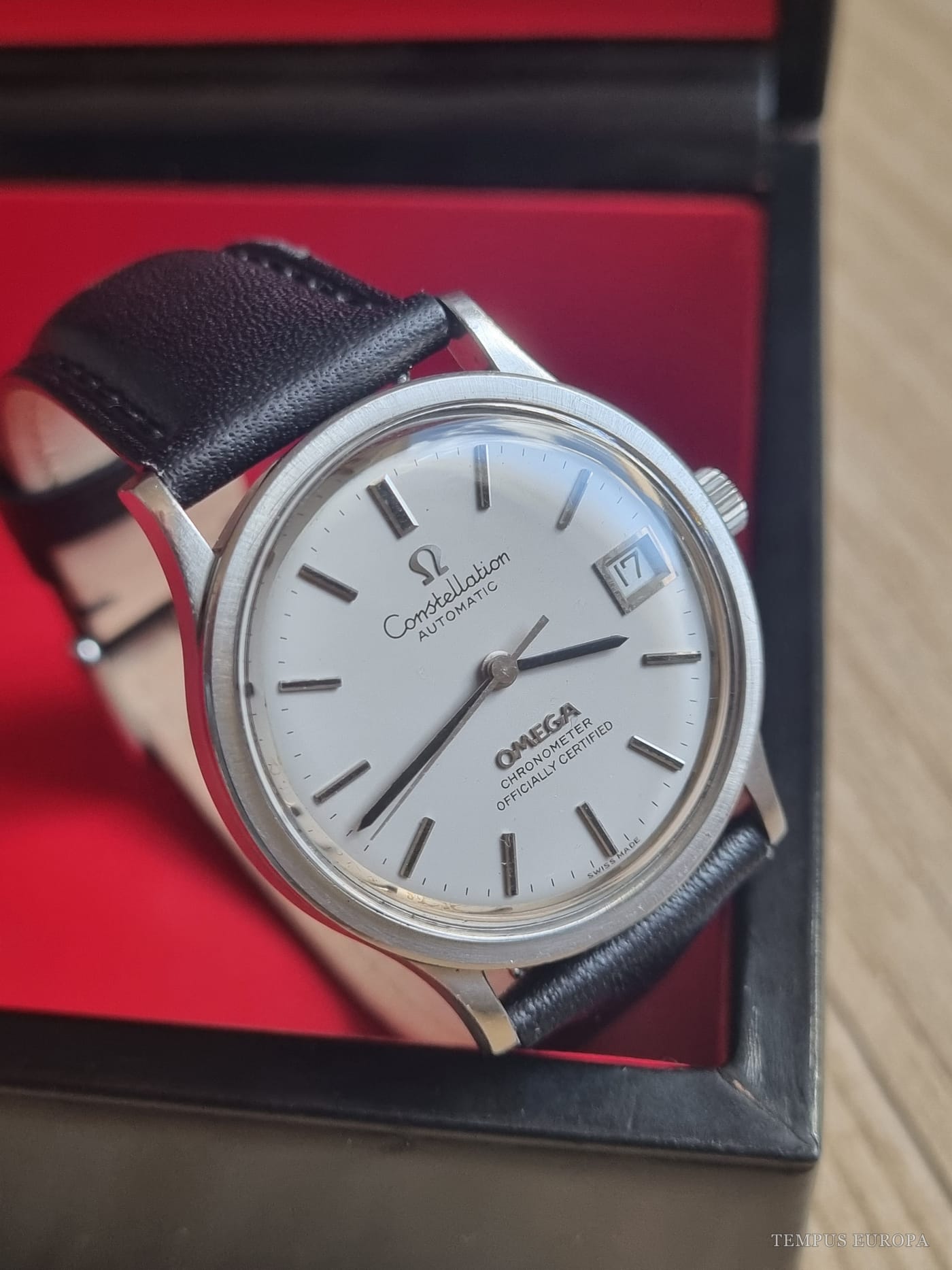
Three things about the 1001
- Eight years ahead of Rolex The Constellation was running at 28,800 vph in 1969. Rolex did not put that frequency into a production calibre until the 3035 in 1977. The comparison comes from the collectors' reference blog on the Constellation, and the dates on both sides check out.
- A lighter rotor, and deliberately so Driving the escapement at 28,800 vph took a stronger mainspring, which in theory called for a heavier rotor. Omega went the other way: a thin, light rotor with reduction gearing, so the winding mechanism took less punishment. That was a design decision, not a saving.
- The medallion nobody sees Since 1952 the Constellation caseback has carried a medallion showing the Geneva observatory and its eight stars. It faces the wrist. Omega decided it belonged there anyway.
Technical data
| Diameter | 28.2 mm (12½ lignes) |
|---|---|
| Casing diameter | 27.9 mm |
| Height | 4.25 mm |
| Frequency | 28,800 vph (4 Hz) |
| Lift angle | 52° |
| Shock protection | Incabloc |
| Regulator | Index type, with regulator arm |
| Jewels | 20 |
| Power reserve | 42 hours |
| Functions | Centre seconds with hacking, quickset date |
| Certification | Chronometer, adjusted to five positions and temperature |
On the bench
Lift angle 52°. Enter the wrong figure on the timing machine and the amplitude it gives you means nothing.
The mainspring is the Omega 1010-1208, shared across the whole series. That is the good news about the 1001: eleven related calibres run from the 1000 to the 1035, plenty of parts cross over, and finding a donor is easier than the age of the movement suggests.
If the watch has gone decades without being opened, expect the original oils to have turned to varnish. That is precisely the scenario that gave the calibre its bad name.
Watches that used it
- Omega Constellation automatic chronometer with date (1968-1973)
- Its uncertified twins, the 1000 and the 1002, turn up in Seamaster, Genève and De Ville models of the same years