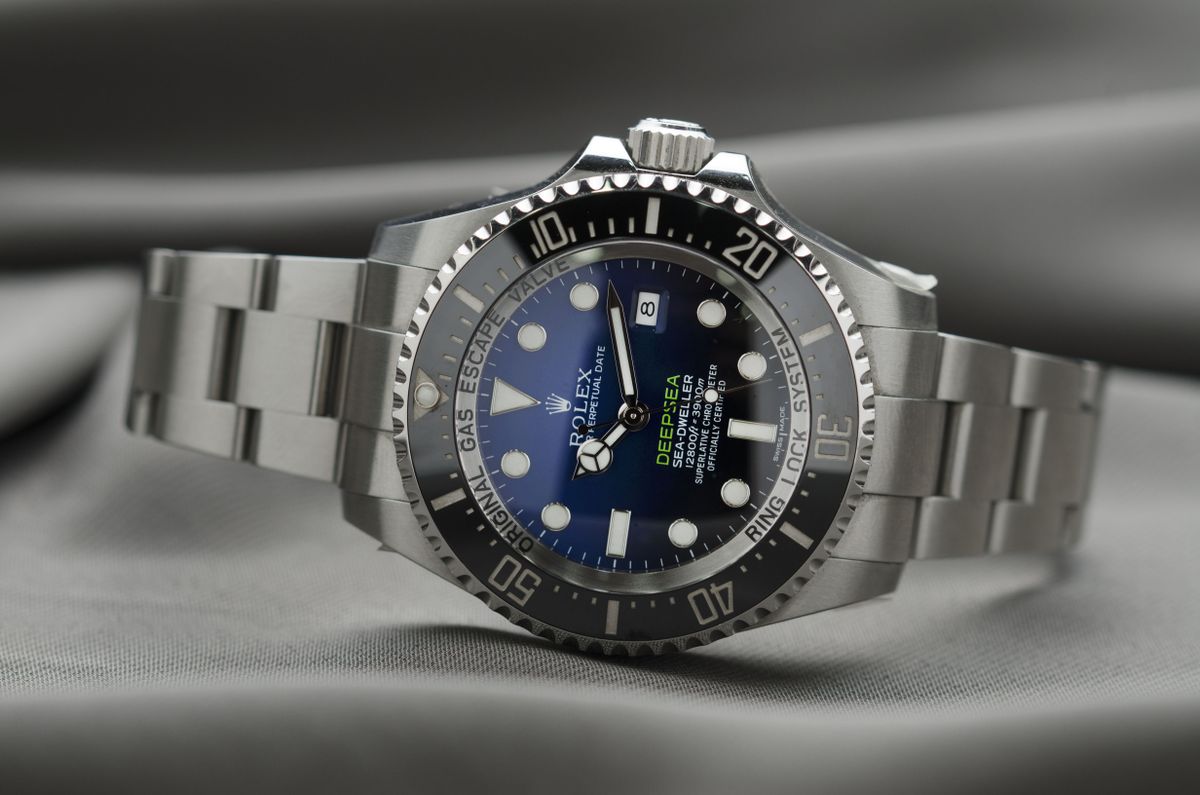
Rolex has built dozens of calibres inside the Oyster Perpetual system since the 1930s, and the numbering runs in a fairly orderly sequence once you know it. Twelve of them are the ones a vintage or sports collector keeps returning to. It begins with the 1000, the last stretch of hand-winding, and the 1030, the first centre-rotor automatic Rolex made entirely itself. Then the 15xx family, 1500 through 1575, which drove the tool watches of the 1960s and 1970s. After that the high-beat 31xx generation: 3035, 3135, 3185. And last the 4130, the integrated chronograph Rolex finally built in-house for the Daytona. Each calibre has its own page — click through for the detail.
| Calibre | Type | Jewels | Frequency | Years | Key note |
|---|---|---|---|---|---|
| 1000 | Hand-wound | 17 | 18,000 vph | Late 1950s | The end of the line for hand-winding in the Oyster |
| 1030 | Automatic | 25 | 18,000 vph | Late 1950s – 1960s | First centre rotor made entirely by Rolex |
| 1500 | Automatic | 26 | 19,800 vph | 1960s – 1970s | The volume base of the 15xx family |
| 1520 | Automatic | 26 | 19,800 vph | 1960s – 1970s | The tough variant; Air-King duty |
| 1530 | Automatic | 25 | 19,800 vph | 1960s – 1970s | A transitional step inside the family |
| 1560 | Automatic | 26 | 18,000 vph | ~1959 – 1965 | First of the sports calibres — Submariner, Explorer |
| 1570 | Automatic | 26 | 19,800 vph | ~1965 – 1977 | The heart of the classic sports Rolex |
| 1575 | Automatic, date | 26 | 19,800 vph | ~1965 – 1977 | The calendar version: GMT-Master, Submariner Date |
| 3035 | Automatic, date | 27 | 28,800 vph | 1977 – ~1988 | High beat arrives, and with it the quickset date |
| 3135 | Automatic, date | 31 | 28,800 vph | 1988 – ~2015 | Rolex's longest-serving automatic |
| 3185 | Automatic GMT | 31 | 28,800 vph | ~1989 – 2007 | Adds an independent hour hand for the GMT-Master II |
| 4130 | Automatic chronograph | 44 | 28,800 vph | 2000 – present | The Daytona, in-house at last |
How to identify the calibre in a vintage Rolex
Rolex never puts the calibre number anywhere you can read it with the case shut. You either look at the movement through the back — and steel Rolexes of this period almost never have a display back — or you work it out from the watch's reference and its serial range, which between them settle what left the factory in it.
The case reference, engraved between the lugs, together with the serial number is the reliable way to narrow down which calibre a vintage Rolex ought to have. It is also how you spot a movement that does not belong to that reference — commoner than you would think after decades of servicing and swapped parts.