Search · Vintage Omega database
Omega Case References
Type an Omega case reference — OT 14393, say — and the finder returns everything we hold on it: line, year, calibre, case type and material, dial, strap and catalogue number. The same number was often built in more than one version, in steel or in gold, with a calendar or without, so searching the bare number brings up every variant we have on file, side by side.
The case reference is the number that pins down the exact model of a vintage Omega. It is not the serial number, which belongs to one individual watch and nothing else. You will usually find it engraved between the lugs on the back of the case, sometimes behind a one- or two-letter prefix — OT, ST, BA, KM, CK — that tells you what the case is made of: steel, solid gold, plated, or a mixture. If you have an old Omega and want to know which model it actually is, when it was built or what calibre is inside, that reference is the most reliable thing on the watch. The name on the dial is not.
The database holds 451 documented references from the Constellation, Speedmaster and Seamaster lines — the 300, 600 and 1000m variants and the Ploprof included — along with De Ville, Railmaster, Ranchero, Flightmaster and Genève. Most were built between the 1950s and the mid-1980s, the period vintage Omega collectors chase hardest.
Once the finder gives you a calibre number, the Omega movement index covers the movement itself, and our guide to identifying a vintage Omega takes on the rest of the markings.
451 documented case references — start typing.
Case identification
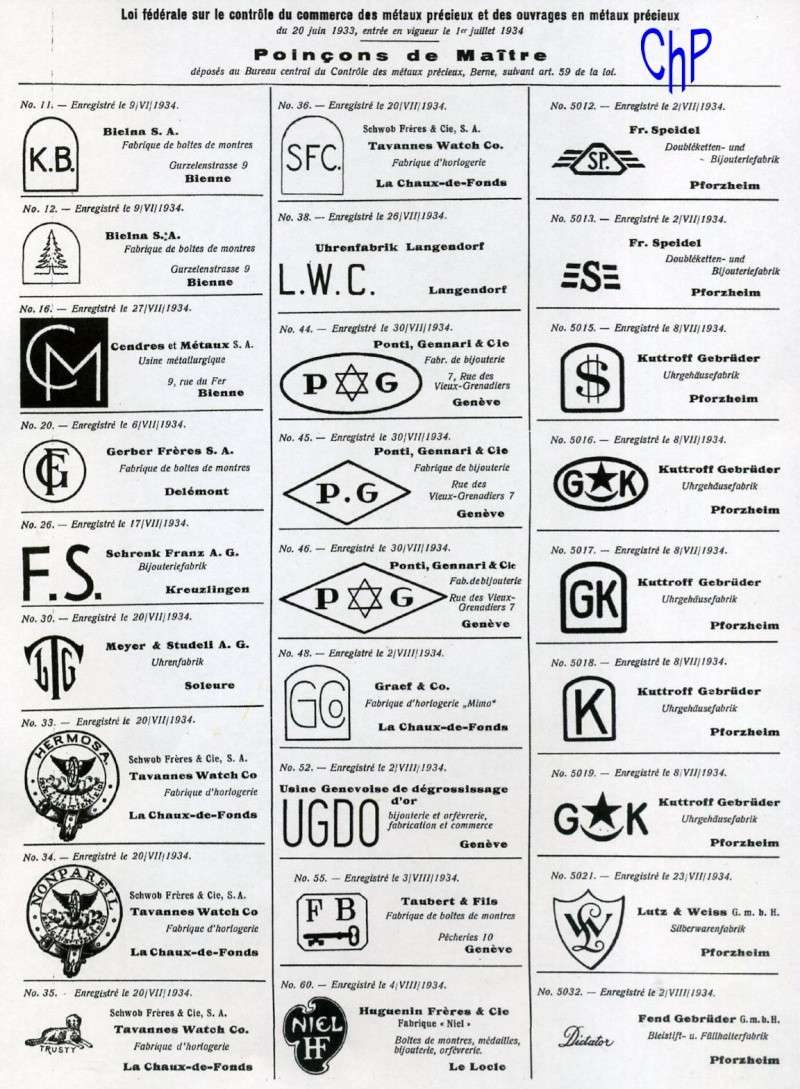
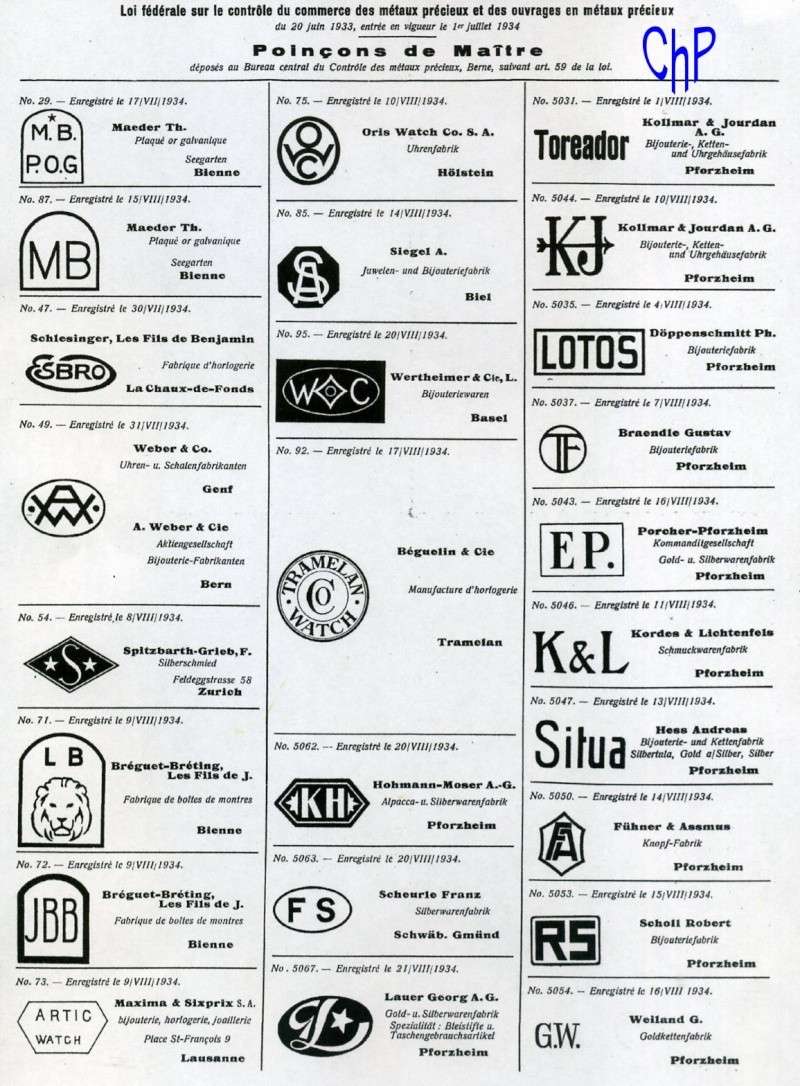
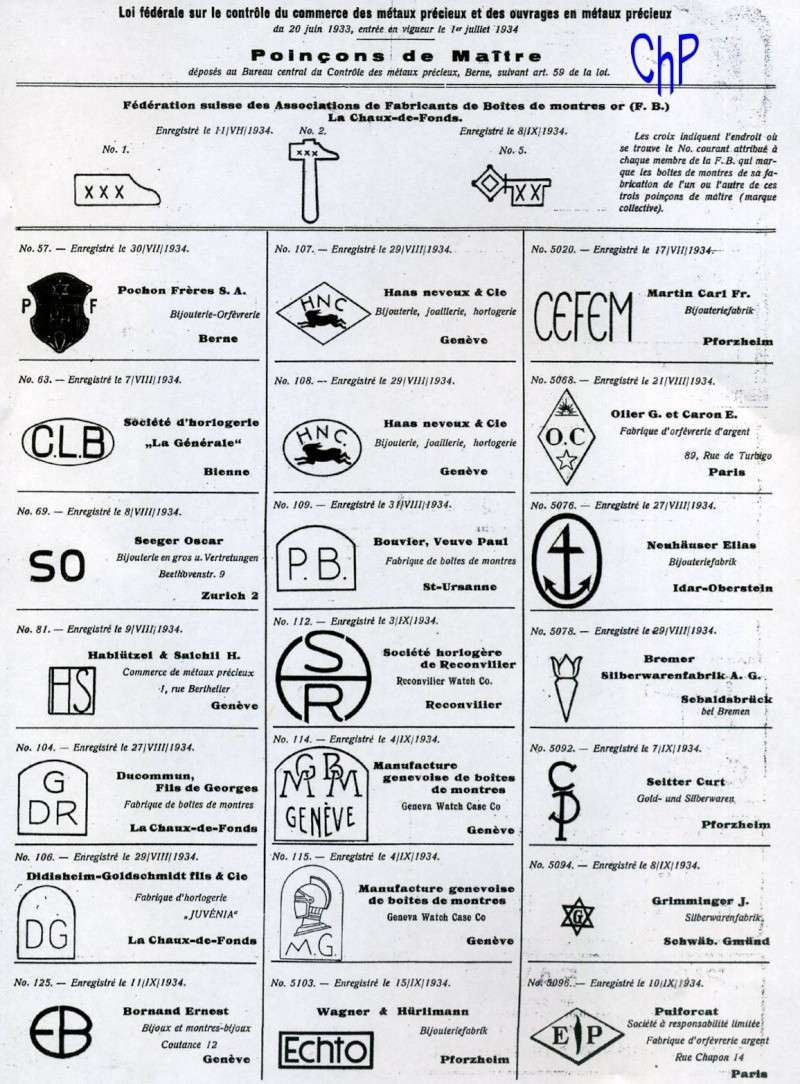
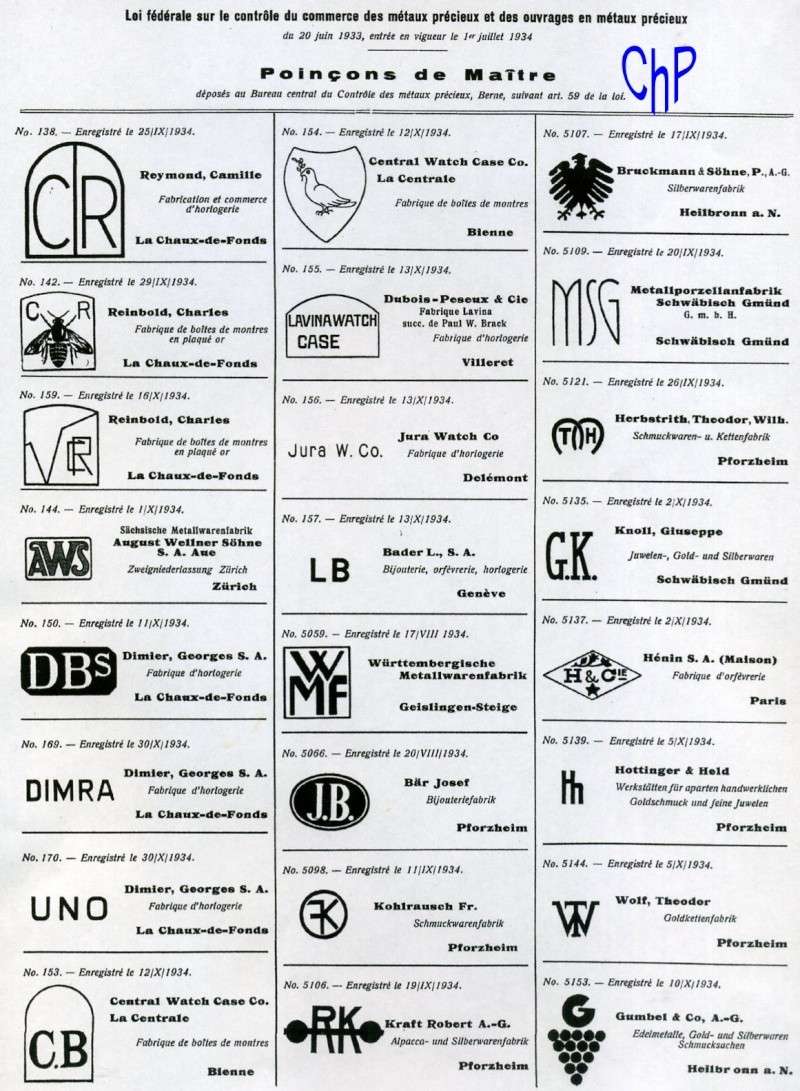
Swiss Master's Marks (1934)
When an old watch has no maker's name on the dial, or has lost the dial altogether, the case still talks. From the 1930s through to the 1960s nearly every Swiss case maker was obliged to stamp its master's mark — the poinçon de maître — inside the caseback, next to the precious-metal hallmark.
This file reproduces the official register lodged with the Central Office for the Control of Precious Metals in Bern under the Swiss federal act of 20 June 1933, which came into force on 1 July 1934. Each entry gives the registration number, the date of entry, the maker, the trade it worked in — case making, jewellery, goldsmithing — and the town. That is enough to work out who made the case of a vintage watch even when the movement carries a different name, which was ordinary practice in Swiss watchmaking at the time: one case workshop would supply several brands at once.
It is a working tool rather than a curiosity. If you have a watch with no visible brand but a punch mark inside the back, matching it against these pages is often the only way to learn who built it, and in which years.
Historic logos
Watch Trademarks
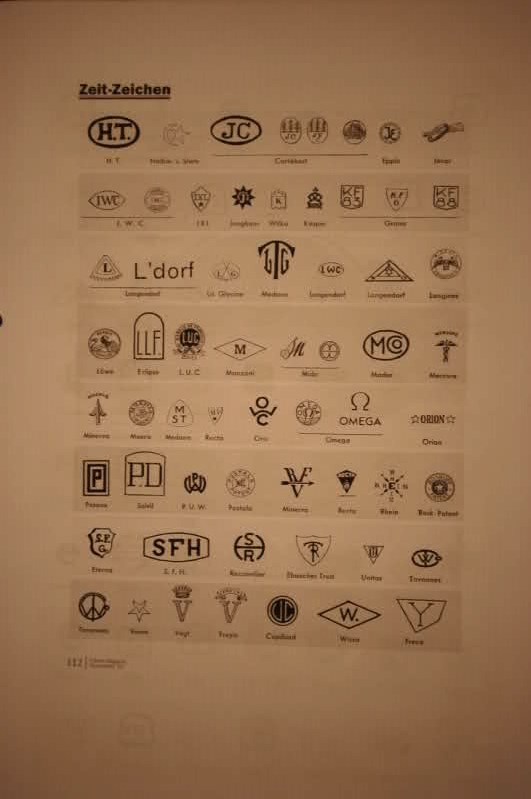
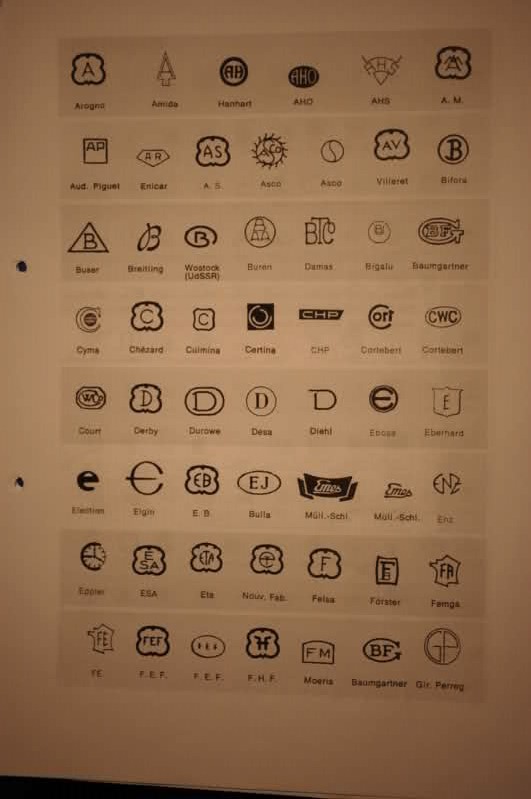
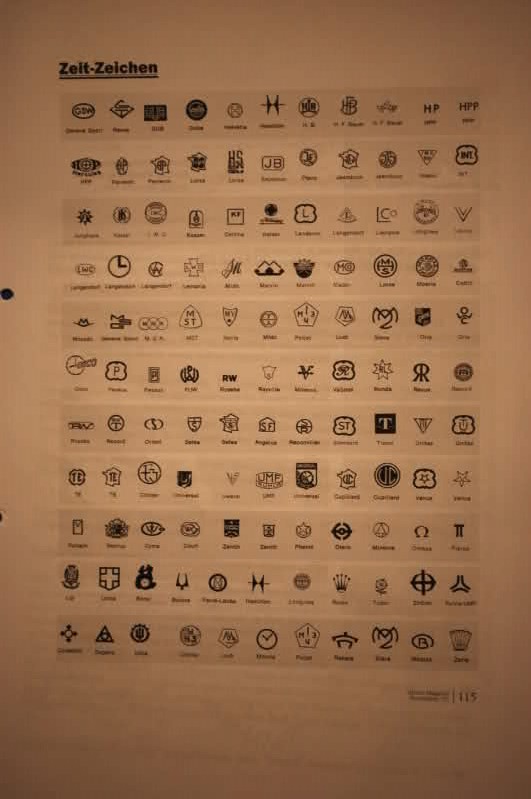
A second kind of mark, and a different thing from the master's mark, is the trademark of the watch brand itself: the emblem engraved or printed by Omega, IWC, Longines, Zenith and dozens of manufacturers nobody remembers now. This file gathers the classic reference pages ("Zeit-Zeichen") carrying scores of those historic logos. They earn their place on watches from small or long-dead brands — the ones that turn up in house clearances and at flea markets, where the dial has kept the emblem but not the full name.
Original technical document · March 1980
Omega — Crystal, Crown and Gasket References
An internal Omega technical document from March 1980, cross-referencing the crystal, crown and gasket that belong to each case number. Eleven pages of factory tables setting out, reference by reference, the exact crystal (sapphire or mineral glass), the waterproof crown and the gasket a watch should have — the difference between a restoration that is right and a generic part that sits badly or lets water in.
The first page also carries the key to the codes (SN = sapphire, TN = mineral glass, PZ = fitted with a steel tension ring, PX = fitted with a yellow tension ring) in French, German and Italian, exactly as it went out to authorised workshops at the time.
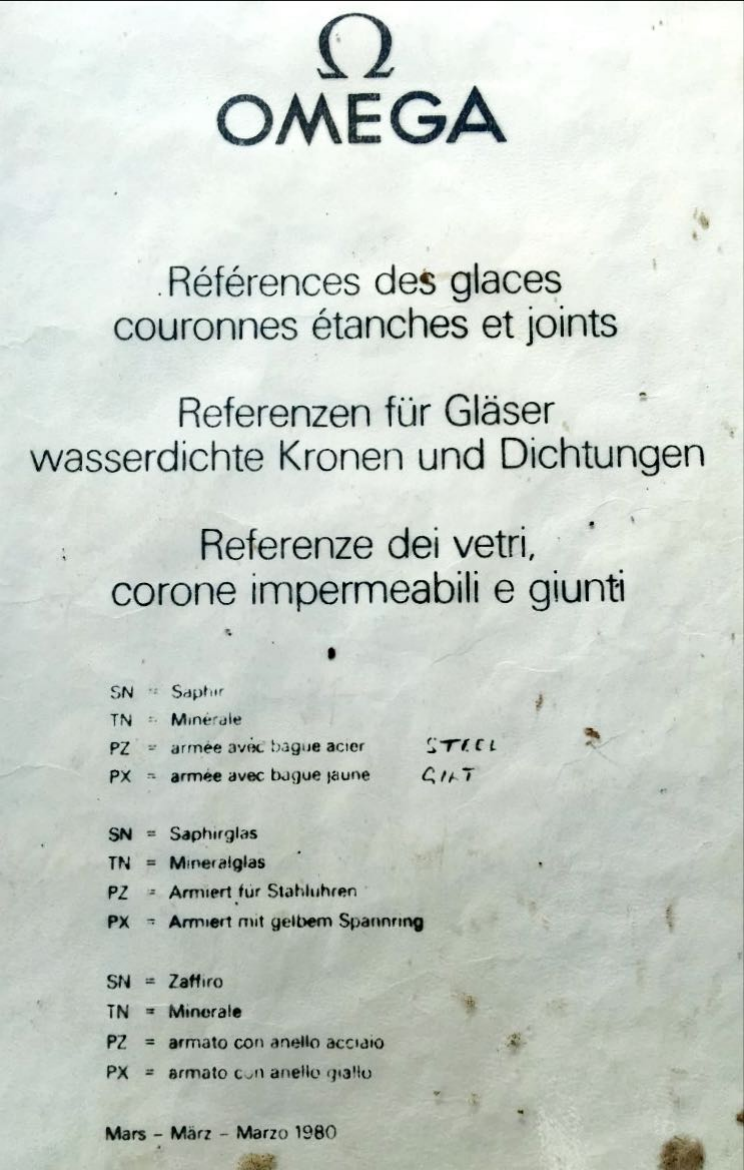
The full document, 11 pages of reference tables ordered by case number.
Download the PDF ↓