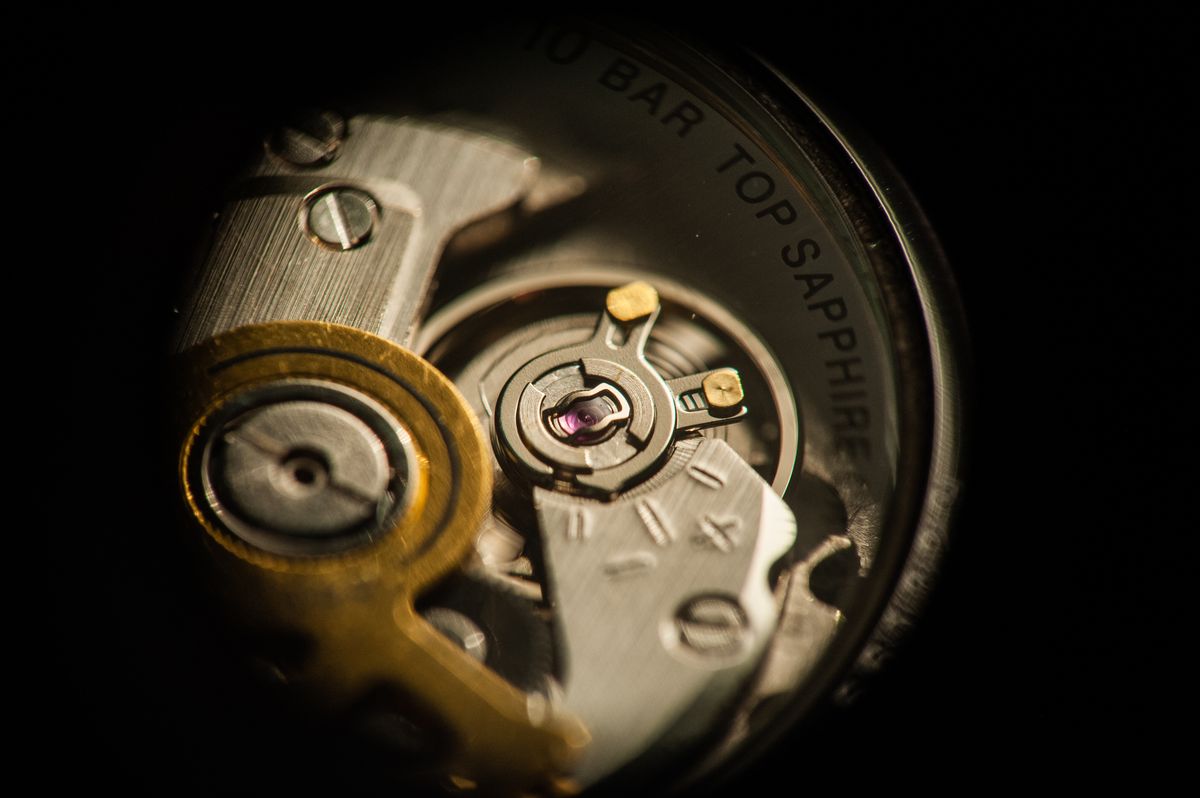
No watch was ever sold with Valjoux on the dial. The firm made ébauches — base movements, often deliberately incomplete — and Rolex, Heuer, Breitling and the rest finished them, adjusted them and signed them as their own. That is why one Valjoux calibre turns up today inside watches from brands with nothing else in common. Four hand-wound chronographs make up the important part of the vintage catalogue. Click through on any number for the full page.
| Calibre | Type | Jewels | Frequency | Years | Key note |
|---|---|---|---|---|---|
| 72 | Hand-wound chronograph, tri-compax | 17 | 18,000 vph | Mid-20th century | The tri-compax inside the vintage Daytona |
| 23 | Hand-wound chronograph | 17 | 18,000 vph | Mid-20th century | The 72's smaller brother |
| 22 | Hand-wound chronograph | 17 | 18,000 vph | Mid-20th century | Column wheel; Patek Philippe used it too |
| 88 | Hand-wound chronograph, calendar | 17 | 18,000 vph | Developed from the 72 | The 72, plus a calendar |
What about the 7750?
Valjoux made the jump to the automatic chronograph in 1973 with the calibre 7750 — known everywhere today as the "ETA/Valjoux 7750", after Valjoux was absorbed into the ETA group. Since it is one movement under a single real name, we cover it once, on the ETA calibre guide.