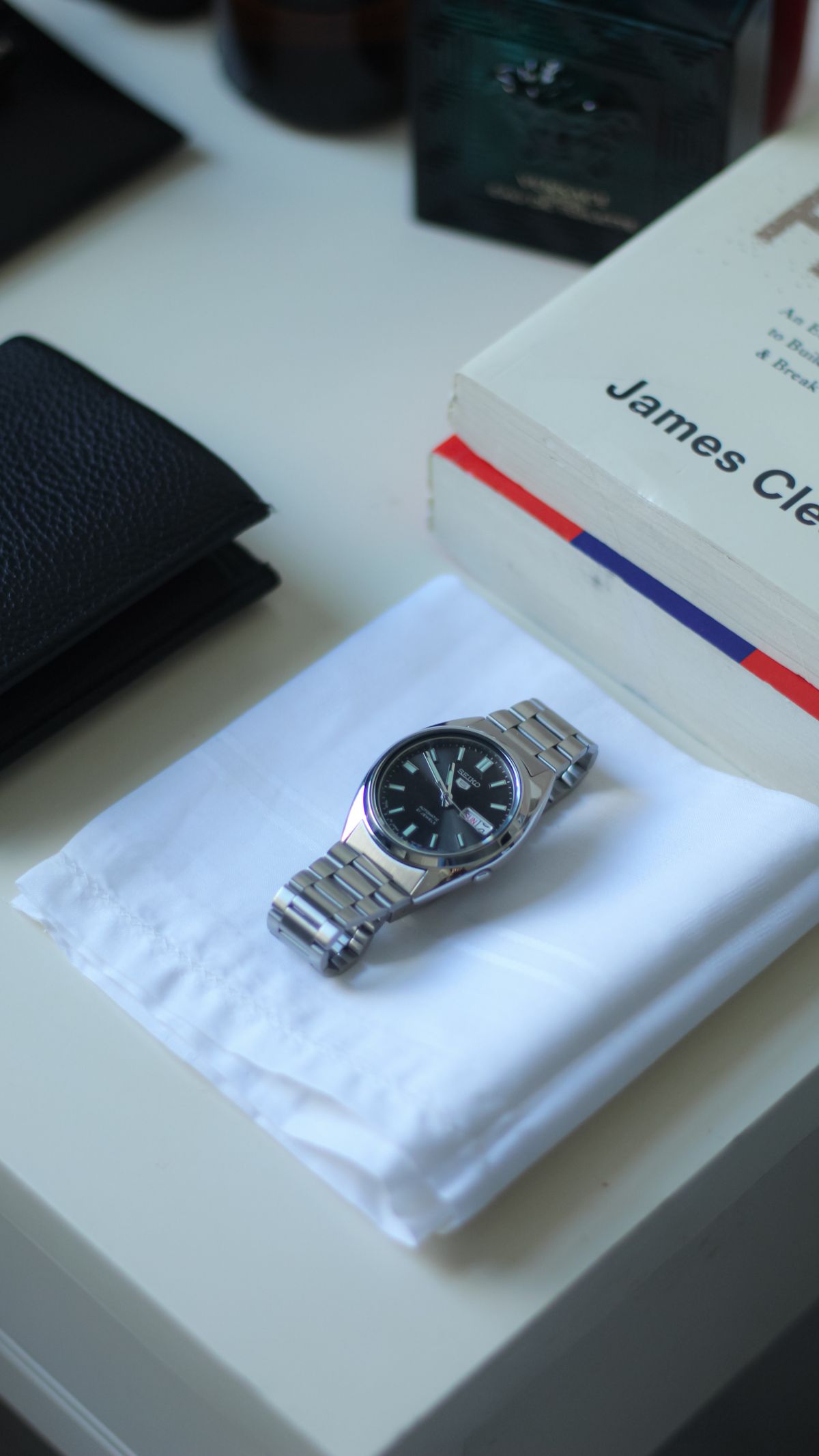
A vintage watch does not clean like a modern one. Nothing about the water resistance of a fifty- or seventy-year-old watch can be taken on trust, even if it left the factory badged as a diver. Gaskets dry out. The adhesive holding the dial together ages along with everything else. And the movement is rarely as shut off from the outside world as a closed case makes it look. What follows separates the parts you can clean with confidence from the parts that need a far lighter hand.
Start here: no water until you have checked
Before a vintage watch goes anywhere near a tap, an ultrasonic bath or even a damp cloth, assume it is not water resistant, whatever the dial says. Factory sealing does not survive the decades. Rubber gaskets harden and crack from age alone — a watch that has never once been submerged will still be sitting on perished gaskets, because it is the material that gives up, not the swimming.
Careful
A vintage diver that has not had a recent pressure test is running on dried-out gaskets, near enough guaranteed. Water gets in past the crown, past the caseback, or around the crystal itself, and you will not see it happen. By the time it shows, the movement has already had it.
Case and crystal, with the watch open
The safest case to clean is an empty one. Take the movement out first — our guide to opening a vintage watch case covers how — and whatever you then do to the case carries no risk at all for what used to be inside it.
- For most steel and gold cases, a microfibre cloth barely damp with warm water and a neutral soap does the entire job.
- The corners where the lugs meet the case, and the seam under the bezel, come up well with a soft bristle brush. Never a metal one.
- Dry the case completely before the movement goes back in — leftover damp does the same damage as water straight from the tap.
- An acrylic crystal cleans exactly like the rest of the case. If it is scratched, this is the moment to polish it out; see our guide to acrylic crystals.
Metal bracelet and leather strap
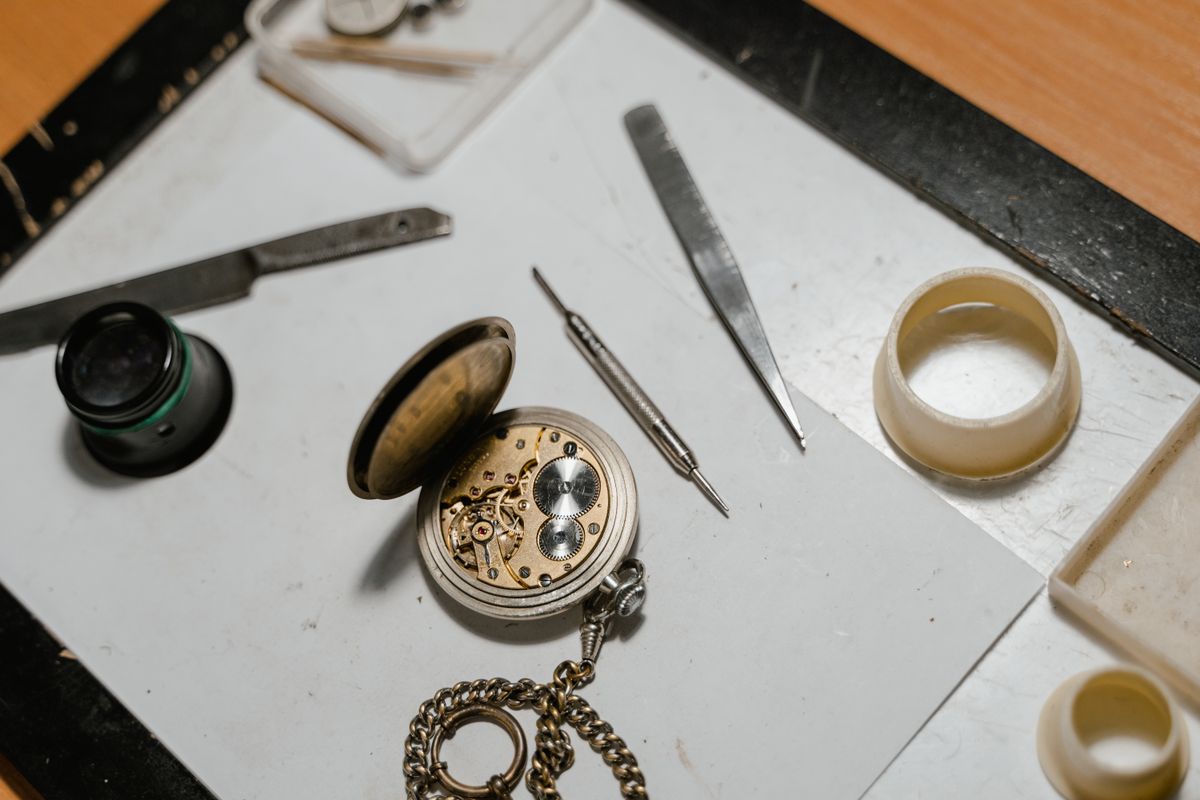
Off the watch, a metal bracelet will take a good deal more than the case will. A soft toothbrush, warm soapy water, and real attention to the gaps between the links, which is where most of the grime collects.
Careful
A leather strap must never get wet. Water distorts the leather, can pull the colour out of it, and speeds up the rot. Clean it dry, with a cloth and a product made for leather, and never soak it or leave it saturated.
The movement: never clean it at home
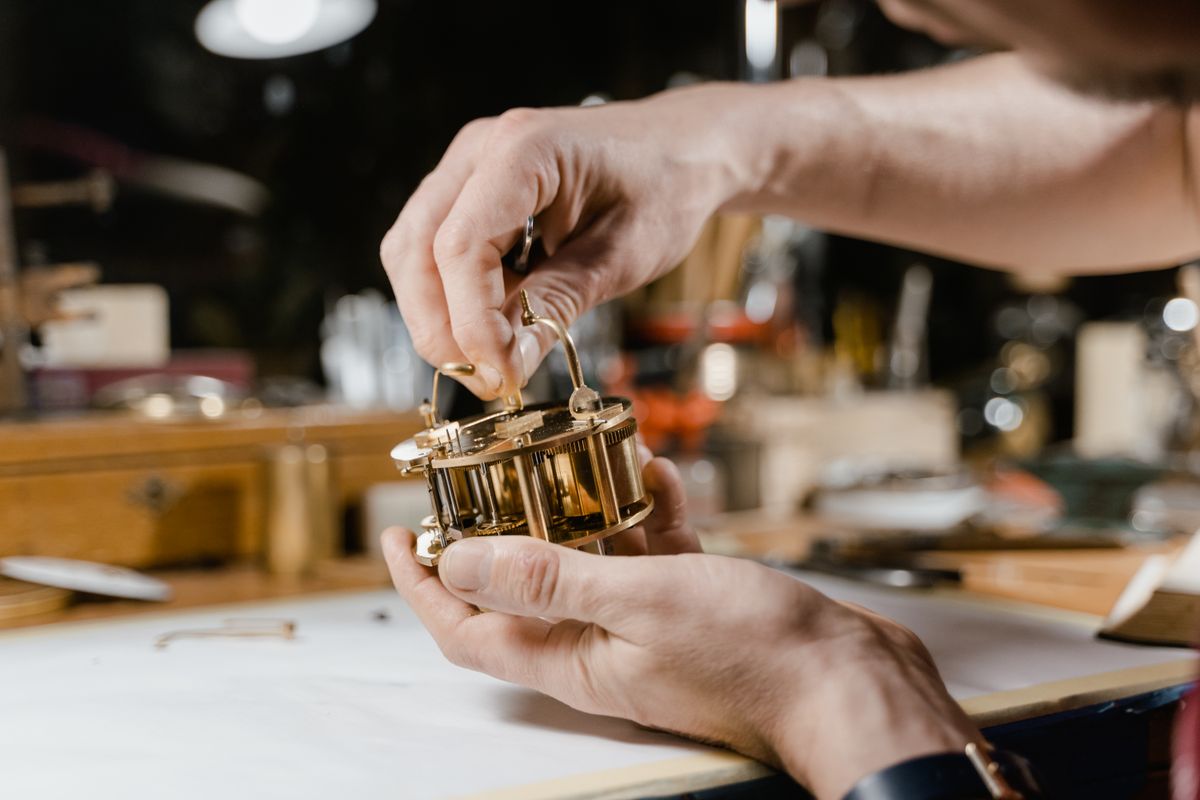
The movement is the one part of the watch that never meets water, solvent or a kitchen-table ultrasonic bath. Not under any circumstances. Cleaning a mechanical movement properly means stripping it down part by part, running each component through a machine with the correct cleaning fluids, and then re-oiling every friction point with the right oil for it, chosen by viscosity. That is trained work, done with a professional watchmaker's tools.
Dirty, rusted, or simply years overdue a service — the answer is the same in all three cases. It goes to a watchmaker. You do not take this one on yourself.
The mistakes that come up again and again
- Ultrasonic cleaning with the movement still in the watch: the vibration can knock delicate parts of the escapement and the balance out of adjustment.
- Alcohol or solvent on the dial: plenty of vintage dials carry a finish or a patina that a harsh solvent destroys for good.
- Stiff brushes and scouring pads: they scratch metal and crystal alike, however tough the surface looks.
- Dunking the watch just to see: without a recent pressure test done by a professional, never assume the watch can meet water at all.