Imagen: Seiko, web oficial
The storyWhy this reference matters
The 6159 of 1968 was Seiko's move into the first division of diving. Until then its ceiling was the 150 metres inherited from the 62MAS. That year brought a case rated to 300 and a Hi-Beat movement, which in Seiko's language means ten beats a second. It was the watch with which the company stopped making affordable tools and started making working instruments. Prospex has reissued it several times, and this series is called, without ceremony, 1968 Heritage.
What is interesting about the SPB519J1 is not the reissue but the graft. Seiko started mixing diver and GMT in 2023 with the SPB381 and its siblings, an idea that did not exist in the 6159, because that watch measured dive time and not time zones. The 2025 version sharpens the formula, pushes water resistance up to the original's 300 metres, and introduces a clasp with six micro-adjustment steps that extends fifteen millimetres without tools, meant to go over a wetsuit.
Work out what kind of GMT this is before you fall for it. The 6R54 is what the trade calls a caller: the 24-hour hand is set independently from the crown, but the local hour hand is tied to the minutes and will not jump hour by hour. In plain terms, it is excellent for keeping an eye on the time back home and awkward for changing zone when you land. In exchange you get 72 hours of reserve, which on a watch worn now and then is more use than a quick jump.
SpecificationsThe numbers, in one table
| Brand | Seiko |
|---|---|
| Family | Prospex |
| Reference | SPB519J1 |
| Years made | desde 2025 |
| Calibre | Seiko 6R54 |
| Movement | Automático |
| Frequency | 21.600 alt/h (3 Hz) |
| Power reserve | Aprox. 72 horas |
| Jewels | 24 |
| Complications | GMT tipo caller (segundo huso horario) · Fecha · Bisel giratorio unidireccional · Parada de segundero |
| Diameter | 42 mm |
| Thickness | 13.3 mm |
| Lug to lug | 48.6 mm |
| Lug width | 20 mm |
| Case | Acero inoxidable con bisel de inserto cerámico |
| Crystal | Zafiro con tratamiento antirreflectante interior |
| Water resistance | 300 m (diver's) |
IdentificationHow to tell it apart
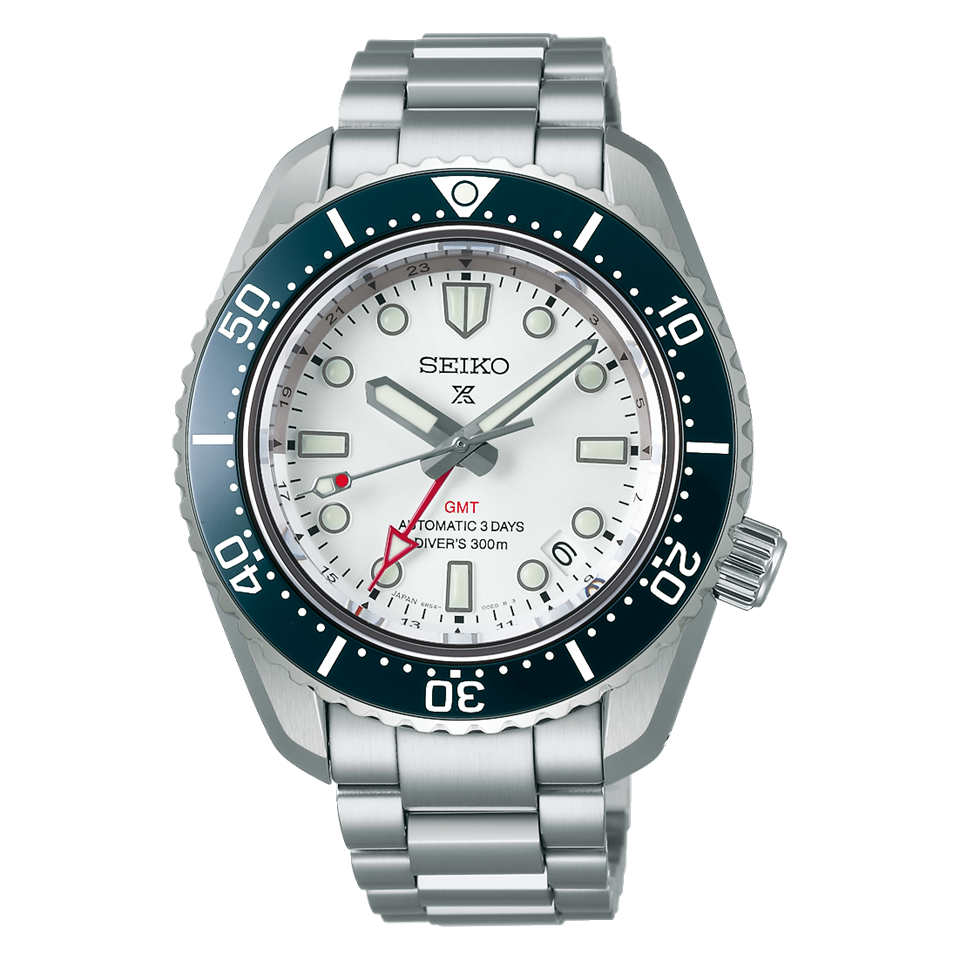
Off-white silver dial with a sunray finish and raised markers filled with LumiBrite, unidirectional bezel with a blue ceramic insert and a 60-minute scale. That pairing of pale dial and blue ceramic is what marks the SPB519 out within the family. The previous generation, which shares the case architecture, played with other combinations.
The numbers to check are 42 mm across, 13.3 tall and 48.6 lug to lug, on 20 mm lugs, weighing 188 grams on the bracelet. Look at the clasp: if it has the six-position micro-adjustment with up to fifteen millimetres of extension, it belongs to this batch. That same clasp made its debut on the limited-run SPB509.
Round the back, a solid screw-down case back and 300 metres with the Diver's designation, which is not the same thing as a plain 30 bar. Screw-down crown, magnetic resistance of 4,800 A/m and sapphire with anti-reflective coating on the inside face. The 24-hour hand and the date window are the pair that separate it from a Prospex without GMT.
CollectingWhat collectors check
The first thing you check on a diver with a ceramic bezel is the insert itself. Ceramic barely scratches, but it chips if the watch takes a sharp knock on the edge, and a chip cannot be polished out or disguised. Check as well that the bezel turns with clean clicks and no side play, because a loose bezel is one of the more expensive faults to put right properly.
The 6R54 is a serious calibre within Seiko's middle tier, rated at -15 to +25 seconds a day. It is not a chronometer and does not claim to be. What you do want to understand before paying is the caller business: plenty of people sell a GMT like this after three months because they expected to move the local hand on landing and found they had to reset the whole watch.
The 42 mm frightens less than it sounds, because the lugs close at 48.6 mm, so it stays on a medium wrist without hanging over the bone. The 188 grams, on the other hand, you notice, and that is where the micro-adjustment decides whether the watch wears well or slides about in summer. Buying used, ask for a photo of the clasp open: it is the detail that separates this generation from the last.
Common questionsWhat people ask us about this reference
Is the GMT on the Seiko SPB519J1 a caller or a flyer?
A caller, sometimes called an office GMT: the 24-hour hand is set independently, but the local hand does not jump on its own. It is made for following the time at home rather than switching zones mid-journey.
What is the power reserve of the 6R54 calibre?
Around 72 hours. It beats at 21,600 vibrations per hour with 24 jewels, rated at -15 to +25 seconds a day.
Can you actually dive with the SPB519J1?
Yes. It is certified as a 300-metre dive watch, with a screw-down crown and case back and a unidirectional bezel carrying a 60-minute scale.
How is it different from the SPB381?
They share the idea of a diver with a caller GMT, but the 2025 SPB519 raises water resistance to 300 metres, introduces the silver dial with a blue ceramic bezel and adds the six-step micro-adjust clasp.
Keep readingWhere to go from here
Close relativesThe ones it gets confused with
Confidence: alta — this page was checked against the sources below. If a detail looks wrong to you, write to us and we will fix it.