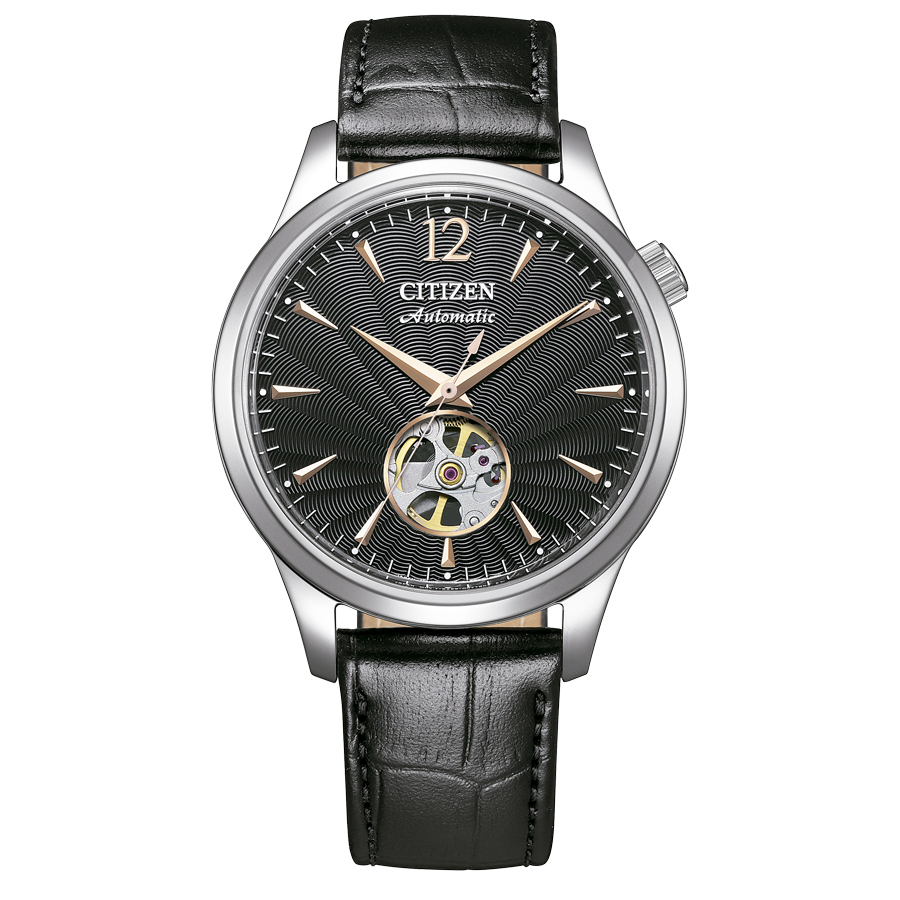
Imagen: Citizen, web oficial
The storyWhy this reference matters
Citizen owns Miyota, and Miyota is the reason half the world's affordable mechanical watches exist at all. The 82 family of calibres started in the 1970s, is made on CNC lathes with automated assembly, and that mix of price and reliability made it the default engine for microbrands once they started sprouting. What is notable here is that the calibre is not hidden under a solid back or signed by somebody else: Citizen puts it in its own watch, under its own name and number, the 8229.
The open heart is not a dial someone drilled at the last minute to look pretty. The open-heart versions of this family start from the base calibre, drop the date wheel and cut back the bridges so the balance shows through beneath the dial. Put another way: the hole was paid for with the calendar. Anyone who wants an automatic with a date has other options in the same house; here the deal is watching the balance swing at 21,600 vibrations per hour, which is six beats a second.
And there is an irony underneath that explains why this line exists. The brand that made light-powered watches its flag keeps a modest mechanical range with no photovoltaic cell, no radio and no GPS: just a real mainspring, a leather strap and a screwed glass back to watch the rotor turn. In a company so committed to electronics, a watch like this works almost as a statement of intent in reverse.
SpecificationsThe numbers, in one table
| Brand | Citizen |
|---|---|
| Family | Mechanical |
| Reference | NH9131-14E |
| Calibre | Citizen 8229 |
| Movement | Automático |
| Frequency | 21.600 alt/h (3 Hz) |
| Power reserve | 40 horas |
| Jewels | 21 |
| Complications | Corazón abierto (volante a la vista) |
| Diameter | 40 mm |
| Thickness | 10.7 mm |
| Lug width | 19 mm |
| Case | Acero inoxidable |
| Crystal | Mineral |
| Water resistance | 5 bar (50 m) |
IdentificationHow to tell it apart
A 40 mm steel case, 10.7 thick, round and unfussy, with a screwed transparent back. The crystal is mineral, not sapphire: be clear about that from the start, because the Tsuyosa from the same brand, at broadly similar money, does have sapphire. The leather strap is 19 mm with a butterfly clasp, an awkward width if you later want to change it: 19 is not 20, and almost nobody has that width spare in a drawer.
The -14E finish is the black dial with the black strap. The balance window sits low on the dial and there is no date aperture anywhere, because the open-heart version drops the calendar wheel precisely to make room. If you see an NH9131 with a date in a listing photo, the photo is of a different watch. Stated water resistance is 5 bar: washing your hands without drama, and not much more.
Round the back, the glass shows the rotor signed by Citizen. The calibre is rated at 21 jewels and 40 hours of power reserve, and the official spec sheet admits a deviation of −20 to +40 seconds a day. That is a stated factory tolerance, not a fault: if the watch gains fifteen seconds daily, it is doing what it promised.
CollectingWhat collectors check
With a watch like this you are not buying an investment, you are buying something that runs. The first thing to look at on a used one is the mineral crystal: it scratches if you look at it, and a surface covered in fine marks is the sign of real wear. It is also the cheapest part of the whole thing to replace, so a marked crystal is better used to argue the price down than to walk away from the sale.
The rotor in this family of calibres winds in one direction only, so it needs more wrist than an ETA to reach full wind. If it is handed to you stopped and barely running, move it for a minute before judging the reserve. Check that the crown hand-winds, because the 8229 allows it, and hold the watch to your ear to listen to the rotor: a rough buzz from a dry bearing is the classic sign that a service is due.
And a word about expectations. Behind that glass there is no haute horlogerie finishing: industrial bridges, a stamped rotor, and that is it. The appeal of this watch is watching the balance move through the gap in the dial, not hunting for Côtes de Genève that were never there. Anyone buying for the second reason is going to be disappointed in writing.
Common questionsWhat people ask us about this reference
Does the Citizen NH9131 have a sapphire crystal?
No. Citizen specifies mineral glass. It is a good deal softer than sapphire and scratches easily, though it is also cheap to replace when the time comes.
Does the Citizen Open Heart have a date?
No. The open-heart versions of this calibre family remove the date wheel precisely so the balance can be opened up in the dial. That is the price of the show.
Can it be hand-wound?
Yes. The 8229 is automatic with manual winding, so you can start it from the crown instead of waiting for the rotor to do all the work.
How much power reserve does the 8229 calibre have?
Citizen states 40 hours at full wind. Leave it on the bedside table on Friday night and you will find it stopped on Sunday morning.
Keep readingWhere to go from here
Close relativesThe ones it gets confused with
Confidence: media — this page was checked against the sources below. If a detail looks wrong to you, write to us and we will fix it.