Imagen: Seiko, web oficial
The storyWhy this reference matters
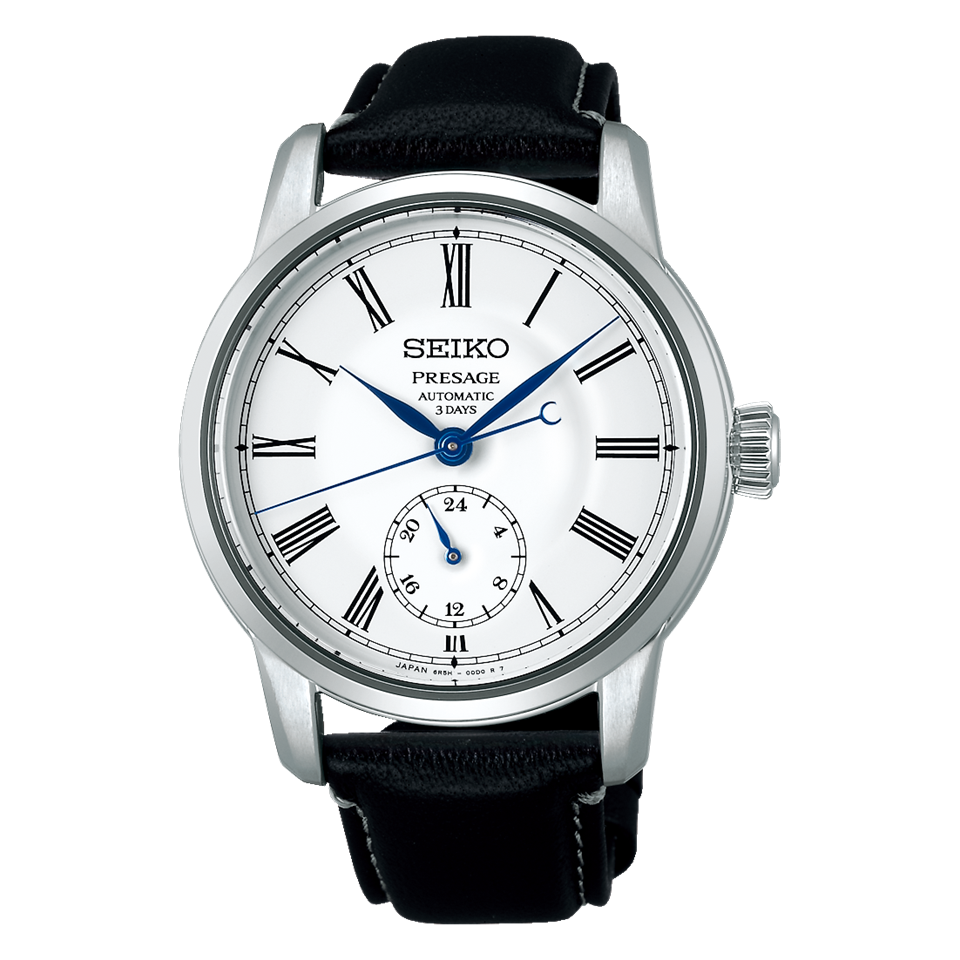
Kintarō Hattori opened his watch shop in Tokyo in 1881 and set up the Seikosha factory in 1892. Three years later the Timekeeper came out of it, a pocket watch with a white enamel dial and elongated Roman numerals, the first finished product the company ever sold. In 2025, with that watch turning a hundred and thirty, Seiko decided to mark the occasion where it shows most. The SPB495J1 does not copy the pocket watch's case. It copies its dial.
Making enamel means accepting that you are going to throw pieces away. Vitrified powder is spread over a metal base and goes into the kiln at high temperature; if a bubble or a crack comes out, the dial goes in the bin and you start again. Mitsuru Yokosawa joined Fuji Porcelain Enamel in 1971 and has spent more than half a century fighting that material. His trademark is laying down coats barely a tenth of a millimetre thick without letting them ripple. He and his team make these dials.
The detail that starts the most arguments is not the enamel but what sits at six. Where the Timekeeper had small seconds, the SPB495J1 puts a twenty-four-hour subdial that works as a morning-or-afternoon indicator. In exchange there is no date window and the white disc stays whole. Underneath beats the 6R5H, automatic with seventy-two hours of reserve, and the screwed case back is transparent. It is not a limited edition: Seiko left it in the permanent catalogue, which is unusual for a dial made by hand.
SpecificationsThe numbers, in one table
| Brand | Seiko |
|---|---|
| Family | Presage |
| Reference | SPB495J1 |
| Years made | desde 2025 |
| Calibre | Seiko 6R5H |
| Movement | Automático |
| Power reserve | Aprox. 72 horas |
| Jewels | 24 |
| Complications | Indicador de 24 horas (AM/PM) · Parada de segundero |
| Diameter | 40.2 mm |
| Thickness | 12.1 mm |
| Lug to lug | 48 mm |
| Lug width | 20 mm |
| Case | Acero inoxidable con revestimiento súper duro |
| Crystal | Zafiro de doble curvatura con tratamiento antirreflectante interior |
| Water resistance | 10 bar (100 m) |
IdentificationHow to tell it apart
First, the enamel. Seen at an angle it has depth and a wet-looking shine that lacquer never manages, and the centre of the dial is very slightly sunken to play that up. Over it, thick, elongated black Romans, a railway minute track and blued hands. There is no date anywhere: the only subdial is the twenty-four-hour register at six.
Earlier enamel dials in the Presage range came with Arabic numerals and small seconds. The SPB495J1 is the one with Romans and a twenty-four-hour counter, and that combination is not repeated in the collection. Seiko files it officially under the Presage Classic Series, though much of the press groups it under the Craftsmanship label, which is how the brand organises its hand-made dials.
Numbers to check against: 40.2 mm across, 12.1 tall and 48 lug to lug, with 20 mm lugs and an LWG-certified leather strap 190 mm long on a three-fold folding clasp. The case carries a super-hard coating and the back is screwed and transparent. If the one you are shown has a solid back, it is not this watch.
CollectingWhat collectors check
The enamel drives the valuation. Hold it to the light and look at an angle for any hairline or chip along the rim and around the dial feet: a chipped enamel dial is not touched up, it is replaced, and replacing it depends on Seiko still holding stock. Small irregularities from the firing, on the other hand, are normal and take nothing off the value. They are the proof it is not a print.
The 6R5H belongs to the 6R family, the one Seiko places below its 8L and 9S movements: easy to maintain, with a generous factory tolerance of -15 to +25 seconds a day, though in practice they tend to run rather better than that. Its seventy-two hours are the real change from the older 6R calibres. Leave it off for a whole weekend and it is still running on Monday.
Second-hand, look at the strap, which is the first thing to wear out and the cheapest to replace, and at the sapphire case back, which marks easily if the watch has lived face up on a desk. As it is not a limited edition, box and papers count for less than they would on a short-run Presage. What you are paying for here is the disc.
Common questionsWhat people ask us about this reference
Is the dial on the Seiko SPB495J1 real enamel?
Yes. It is vitreous enamel fired in a kiln by Mitsuru Yokosawa's workshop, applied in coats of around a tenth of a millimetre. It is not lacquer and it is not printing on brass.
Which calibre is in the Seiko Presage SPB495J1?
The 6R5H, automatic with hand-winding and 24 jewels, giving around 72 hours of reserve. Its official tolerance runs from -15 to +25 seconds a day.
Is the SPB495J1 a limited edition?
No. Seiko includes it in the permanent Presage Classic Series collection. Enamel dials do get made in small numbers, mind, because the process is unforgiving.
How big is the SPB495J1 and how does it wear?
40.2 mm across, 12.1 mm thick and 48 mm lug to lug, with 20 mm lugs. A restrained dress watch: the lug-to-lug is short for the diameter, so it settles well on medium wrists.
Keep readingWhere to go from here
Close relativesThe ones it gets confused with
Confidence: alta — this page was checked against the sources below. If a detail looks wrong to you, write to us and we will fix it.